On p. 233, The Da Vinci Code claims that the divinity of Jesus was decided by "a close vote" at the Council of Nicaea in A.D. 325.
Wrong. It was nearly a unanimous decision. There were over 300 bishops who gathered for the Council of Nicaea. Only two of them refused to sign the creed. I don't know about where Dan Brown comes from, but here in Georgia, 316-2 is not a close vote!
They agreed on the famous Nicene Creed, which reads, in part: "We believe in one God the Father... and in one Lord Jesus Christ, the Son of God... that is the substance of the Father... true God of true God..."
The Council of Nicaea was not convened to discuss if Jesus was divine; it was called to discuss how He was divine. They gathered to express His divinity in theological language to defend against a new heresy of the time, called Arianism. But it was not a suddenly new idea for the early church to say Jesus is God. It goes all the way back to some first century writings known as Matthew, Mark, Luke and John.
(For details on the Council of Nicaea, see W.H.C. Frend, The Rise of Christianity. Philadelphia: Fortress Press, 1984, 498-499)
P.S. The Associated Press published an excellent report today that includes quotes from a liberal Yale scholar who calls the novel's historical background "wildly misinterpreted." It's not just conservative Christians who think The Da Vinci Code has its "facts" wrong. No reputable historian can defend the novel's distortions of history.
Saturday, April 29, 2006


Thursday, April 27, 2006
Debunking Da Vinci Code # 2
The Da Vinci Code claims that "the greatest cover-up in human history" is that not only did Jesus marry Mary Magdalene, but they had a daughter, named Sarah, whose descendants live today through the Merovingian line of French royalty in the Plantard and Saint-Clair families.
These claims come from the writings of Pierre Plantard, who spent time in Jail for fraud in 1953, and in 1993 admitted under oath that he made up the whole story. (See Lee Strobel and Garry Poole, Discussing the Da Vinci Code, p. 23)
Hmmm. So who is the real fraud?
These claims come from the writings of Pierre Plantard, who spent time in Jail for fraud in 1953, and in 1993 admitted under oath that he made up the whole story. (See Lee Strobel and Garry Poole, Discussing the Da Vinci Code, p. 23)
Hmmm. So who is the real fraud?
Tuesday, April 25, 2006
Debunking Da Vinci Code # 1
Yesterday I introduced The Da Vinci Code for those who aren't familiar with the book. Today I begin a series of blogs to debunk the false claims of this book (and upcoming movie).
If there is a religious message in The Da Vinci Code, it is this: you can experience God through sex, so worship the “sacred feminine,” for the Holy Grail is actually Mary Magdalene, who was the wife of Jesus Christ.
Such claims distort the Bible’s teaching that sexual union is expressed with joy and satisfaction that is pleasing to God only within the bonds of a marriage commitment, a union which resembles the marrage of Jesus to the church, not Jesus to Mary Magdalene (Ephesians 5:22-33).
The Da Vinci Code claims that the marriage of Jesus Christ to Mary Magdalene is a matter of “historical record.” On page 246 the book cites The Gospel of Philip, which says Jesus kissed Mary of Magdalene, his “companion.” What the book fails to mention is that this was a heretical gospel written over two hundred years after the time of Christ, and of all the hundreds of Christian and pseudo-Christian writings of the early centuries, this is the only passage that even implies Jesus had a romantic relationship with Mary Magdalene. One questionable passage by a late “gospel” with an heretical agenda is hardly a matter of “historical record.”
If there is a religious message in The Da Vinci Code, it is this: you can experience God through sex, so worship the “sacred feminine,” for the Holy Grail is actually Mary Magdalene, who was the wife of Jesus Christ.
Such claims distort the Bible’s teaching that sexual union is expressed with joy and satisfaction that is pleasing to God only within the bonds of a marriage commitment, a union which resembles the marrage of Jesus to the church, not Jesus to Mary Magdalene (Ephesians 5:22-33).
The Da Vinci Code claims that the marriage of Jesus Christ to Mary Magdalene is a matter of “historical record.” On page 246 the book cites The Gospel of Philip, which says Jesus kissed Mary of Magdalene, his “companion.” What the book fails to mention is that this was a heretical gospel written over two hundred years after the time of Christ, and of all the hundreds of Christian and pseudo-Christian writings of the early centuries, this is the only passage that even implies Jesus had a romantic relationship with Mary Magdalene. One questionable passage by a late “gospel” with an heretical agenda is hardly a matter of “historical record.”
Monday, April 24, 2006
The Da Vinci Code - why the fuss?
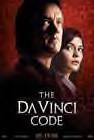
On May 19, the Hollywood release of Dan Brown's bestselling novel, The Da Vinci Code, will appear on the big screen, starring Tom Hanks. The book version claims that Jesus married Mary Magdalene and their descendants live on through a royal blood line in Europe (there is no evidence of this). It also claims that Jesus was not considered God by the early church until the Council of Nicaea in A.D. 325 (not true, but its what the book claims), but that a secret society has known the truth all of these years, and the truth has been passed along in artwork and literature, most notably in Leonardo Da Vinci's painting of Mary Magdalene beside Jesus in The Last Supper (actually its a youthful apostle John beside Jesus in the painting).
Many churches, including ours, are responding with special studies to debunk the claims of this book. In the days to come, I will be posting debunking The Da Vinci Code on this blog.
Some may ask, why all the fuss over a piece of fiction? Don't people know it's just a novel? The answer comes on page 1 of the book, with the headline "FACT," where the author claims that what the book says about the secret societies is true, when in fact it is not true. Page 1 includes this claim: "All descriptions of artwork, architecture, documents and secret rituals in this novel are accurate."
Over 40 million people have read this novel, and millions more will see the movie. With its claim to be a historical novel based on "fact," Christians need to respond.
The good news is that the claims of this book can be easily answered, as you will see in the blogs coming up in the days ahead. So for Christians, if we will respond with facts rather than anger, The Da Vinci Code can actually become an opportunity to share our faith.
Monday, April 17, 2006
NAMB president resigns
This morning Dr. Bob Reccord resigned as president of the North American Mission Board (NAMB) of the Southern Baptist Convention.
You can read his resignation letter and a statement from the chairman of the board of trustees at the NAMB website.
The Christian Index, the Georgia Baptist newspaper, has posted their own report on the resignation. Here is the statement that I gave to the Index:
"Dr. Reccord made the right decision. So much trust in his leadership was lost, that it was time for him to step aside. In the days since the task force report was released, he showed no signs that he was willing to work under executive controls. It's great to be visionary, but its also important to be auditory, and listen to the heartbeat of people. It's great to have an entrepreneurial spirit, but it's also important to have a servant spirit and do the work in the trenches sharing Jesus face-to-face with people all across North America. My prayer is that we Southern Baptists will continue to be generous in our support of the Cooperative Program and the Annie Armstrong Offering so that we can strengthen our support for missionaries in the field."
P.S. The trustees of NAMB have received praise for responding to this situation with honesty and action from Where Most Needed, a charity watchdog organization.
You can read his resignation letter and a statement from the chairman of the board of trustees at the NAMB website.
The Christian Index, the Georgia Baptist newspaper, has posted their own report on the resignation. Here is the statement that I gave to the Index:
"Dr. Reccord made the right decision. So much trust in his leadership was lost, that it was time for him to step aside. In the days since the task force report was released, he showed no signs that he was willing to work under executive controls. It's great to be visionary, but its also important to be auditory, and listen to the heartbeat of people. It's great to have an entrepreneurial spirit, but it's also important to have a servant spirit and do the work in the trenches sharing Jesus face-to-face with people all across North America. My prayer is that we Southern Baptists will continue to be generous in our support of the Cooperative Program and the Annie Armstrong Offering so that we can strengthen our support for missionaries in the field."
P.S. The trustees of NAMB have received praise for responding to this situation with honesty and action from Where Most Needed, a charity watchdog organization.
Saturday, April 15, 2006
Defense of the Resurrection
Here are some websites with information to defend the Christian belief in the resurrection:
"The Empty Tomb of Jesus," by Gary Habermas on 4truth.net
"The Resurrection of Jesus," from A Ready Defense
"If Christ Is Not Raised, Reasoning through the Resurrection," by Kenneth Richard Samples at Lifeway.com (well-documented)
Greg Herrick, Ph.D., "The Historical Veracity of the Resurrection Narratives," on Bible.org (long article, very detailed)
J. Hampton Keathley III, "The Resurrection of Jesus Christ," on Bible.org (shorter article, but helpful)
"The Empty Tomb of Jesus," by Gary Habermas on 4truth.net
"The Resurrection of Jesus," from A Ready Defense
"If Christ Is Not Raised, Reasoning through the Resurrection," by Kenneth Richard Samples at Lifeway.com (well-documented)
Greg Herrick, Ph.D., "The Historical Veracity of the Resurrection Narratives," on Bible.org (long article, very detailed)
J. Hampton Keathley III, "The Resurrection of Jesus Christ," on Bible.org (shorter article, but helpful)
To whom do I confess my sins?
Recently I preached on the consequences of sin, from the story of David with Bathsheba (2 Samuel 11), and I stressed the importance of confession of sin for forgiveness. One person emailed to ask, "When you said in Church the first step is to confess your sins, who do I confess them too? I was a little confused!"
Here was my answer:
My apologies for not making this point clearer in my sermon. We confess our sins to the person against whom we have sinned. If it is a private sin, it should be confessed in private. If it is a public sin, it should be confessed in public. Since all sin is against God, we should begin by confessing our sins to God in prayer. Then we also need to confess a sin to the individual we offended, if it is possible to do so.
In the Bible, 1 John 1:9 says that if we confess our sins [to God] then He is faithful and just and will forgive our sins and purify us from all unrighteousness. So we go to God in prayer and honestly tell him our sins. By confessing our sins to God, we receive God's forgiveness, whether anybody else forgives us or not. By confessing sin and admitting that Jesus Christ is our Lord, we find forgiveness for our sins for eternal life (see Romans 10:9-10, 13).
David's prayer of confession in Psalm 51 is a great model of this.
Here was my answer:
My apologies for not making this point clearer in my sermon. We confess our sins to the person against whom we have sinned. If it is a private sin, it should be confessed in private. If it is a public sin, it should be confessed in public. Since all sin is against God, we should begin by confessing our sins to God in prayer. Then we also need to confess a sin to the individual we offended, if it is possible to do so.
In the Bible, 1 John 1:9 says that if we confess our sins [to God] then He is faithful and just and will forgive our sins and purify us from all unrighteousness. So we go to God in prayer and honestly tell him our sins. By confessing our sins to God, we receive God's forgiveness, whether anybody else forgives us or not. By confessing sin and admitting that Jesus Christ is our Lord, we find forgiveness for our sins for eternal life (see Romans 10:9-10, 13).
David's prayer of confession in Psalm 51 is a great model of this.
Friday, April 07, 2006
Gospel of Judas?
Pardon me if I don't rush out and buy the newly revealed "Gospel of Judas" being hailed by the National Geographic Society.
According to this so-called "gospel," Judas only did what Jesus told him to do by betraying Christ.
But, as Tim Graham's "Newsbusters" blog shows, the idea that this somehow disproves the New Testament gospels, is as preposterous as thinking that a document written in 1926 denying Benedict Arnold was a traitor would cause historians to doubt that Benedict Arnold was a "Judas," if you will.
This 3rd or 4th century document is interesting only in that it gives an example of the common heretical and anti-Christian groups that existed at the time. In no way does it have any believability that would challenge the accounts of Matthew, Mark, Luke and John, all dated to the first century with plenty of manuscript and archaeological evidence to show their authenticity.
As a professor Andrey Kurayev, professor at Moscow Theological Academy put it, "This document cannot be traced back to Judas Iscariot for the simple reason that Judas hung himself on the day Christ was crucified and no Gospel of Judas can exist."
So who wrote it? It supports the theology of Gnosticism, perhaps the most common heresy confronting the early church. Gnosticism believed that spirit was good but matter was evil, and thus it denied that Jesus really came in the flesh. More than likely, a Gnostic wrote the so-called "Gospel of Judas" and attached Judas's name to it to bolster support for his ideas, in much the same way that Dan Brown's novel, The Da Vinci Code, uses Leonardo Da Vinci to claim things that Da Vinci never said or did.
According to this so-called "gospel," Judas only did what Jesus told him to do by betraying Christ.
But, as Tim Graham's "Newsbusters" blog shows, the idea that this somehow disproves the New Testament gospels, is as preposterous as thinking that a document written in 1926 denying Benedict Arnold was a traitor would cause historians to doubt that Benedict Arnold was a "Judas," if you will.
This 3rd or 4th century document is interesting only in that it gives an example of the common heretical and anti-Christian groups that existed at the time. In no way does it have any believability that would challenge the accounts of Matthew, Mark, Luke and John, all dated to the first century with plenty of manuscript and archaeological evidence to show their authenticity.
As a professor Andrey Kurayev, professor at Moscow Theological Academy put it, "This document cannot be traced back to Judas Iscariot for the simple reason that Judas hung himself on the day Christ was crucified and no Gospel of Judas can exist."
So who wrote it? It supports the theology of Gnosticism, perhaps the most common heresy confronting the early church. Gnosticism believed that spirit was good but matter was evil, and thus it denied that Jesus really came in the flesh. More than likely, a Gnostic wrote the so-called "Gospel of Judas" and attached Judas's name to it to bolster support for his ideas, in much the same way that Dan Brown's novel, The Da Vinci Code, uses Leonardo Da Vinci to claim things that Da Vinci never said or did.
Thursday, April 06, 2006
Surprise in the cemetery
A few years ago, I conducted a burial service in Reidsville, Georgia for a man who was in his 90s whom I'll call "Lloyd." What his mentally-challenged 45-year-old girlfriend (they lived in adjacent rooms in a nursing home) did at the graveside caught me completely by surprise.
We arrived at the cemetery, and I told some stories about Lloyd's life, when the girlfriend (let's call her "Ruby") interrupted me, saying, "Mr. Bob, I'd like to sing a song." I looked over at Lloyd's family for help. One of the nieces nodded at me as if to say, "Go ahead and let her do it; if you don't, she won't quit talking." So I said, "Ruby, if you still want to sing when I finish my message, you can sing then." That satisfied her, and I continued.
I came to the point in the message when I mentioned Ruby. The family had asked me to say that Ruby and Lloyd loved each other, so I did, and then I braced myself for what Ruby would say. Sure enough, she spoke up again. "Yeah, we loved each other. No man was good to me like he was." I was afraid she was going to go into explicit detail, so I was relieved that was all that she said.
I finished my message, and asked her, "Ruby, do you still want to sing?" She said, "Yes, I do," and she stood up.
What happened next caught me by complete surprise. Ruby held her arms to her side, with hands out like wings, and began to sing the hit pop song from the Bugs Bunny and Michael Jordan movie, Space Jam:
"I believe I can fly/ I believe I can touch the sky/ I think about it every night and day/ Spread my wings and fly away/ I believe I can soar/ I see me running through that open door/ I believe I can fly/ I believe I can fly/ I believe I can fly..."
She sang the entire song, and sang it fairly well. But it said nothing about the Christian faith or the death of a loved-one. When she finished and sat down, I paused a moment, as everybody looked at me. Then I said, "That reminds me of a great gospel song, 'I'll Fly Away,' and because Lloyd believed in Jesus, he'll fly into the presence of the Lord."
After the service, the funeral director said, "Preacher, you recovered from that pretty good."
You know, Ruby's song wasn't really that far off, after all. The Bible says that the Lord himself will descend from heaven as the angel blows the trumpet of God, and the dead in Christ will rise to be with the Lord forever in heaven (1 Thessalonians 4:16-17). Based on that verse, I guess I would agree with Ruby. I do believe I can fly.
We arrived at the cemetery, and I told some stories about Lloyd's life, when the girlfriend (let's call her "Ruby") interrupted me, saying, "Mr. Bob, I'd like to sing a song." I looked over at Lloyd's family for help. One of the nieces nodded at me as if to say, "Go ahead and let her do it; if you don't, she won't quit talking." So I said, "Ruby, if you still want to sing when I finish my message, you can sing then." That satisfied her, and I continued.
I came to the point in the message when I mentioned Ruby. The family had asked me to say that Ruby and Lloyd loved each other, so I did, and then I braced myself for what Ruby would say. Sure enough, she spoke up again. "Yeah, we loved each other. No man was good to me like he was." I was afraid she was going to go into explicit detail, so I was relieved that was all that she said.
I finished my message, and asked her, "Ruby, do you still want to sing?" She said, "Yes, I do," and she stood up.
What happened next caught me by complete surprise. Ruby held her arms to her side, with hands out like wings, and began to sing the hit pop song from the Bugs Bunny and Michael Jordan movie, Space Jam:
"I believe I can fly/ I believe I can touch the sky/ I think about it every night and day/ Spread my wings and fly away/ I believe I can soar/ I see me running through that open door/ I believe I can fly/ I believe I can fly/ I believe I can fly..."
She sang the entire song, and sang it fairly well. But it said nothing about the Christian faith or the death of a loved-one. When she finished and sat down, I paused a moment, as everybody looked at me. Then I said, "That reminds me of a great gospel song, 'I'll Fly Away,' and because Lloyd believed in Jesus, he'll fly into the presence of the Lord."
After the service, the funeral director said, "Preacher, you recovered from that pretty good."
You know, Ruby's song wasn't really that far off, after all. The Bible says that the Lord himself will descend from heaven as the angel blows the trumpet of God, and the dead in Christ will rise to be with the Lord forever in heaven (1 Thessalonians 4:16-17). Based on that verse, I guess I would agree with Ruby. I do believe I can fly.
Monday, April 03, 2006
Strolling through Savannah, Georgia



I took these pictures this past Saturday as Mary I spent a beautiful spring day strolling around Savannah's historic district. Spring is a beautiful reminder of the resurrection!
Subscribe to:
Posts (Atom)